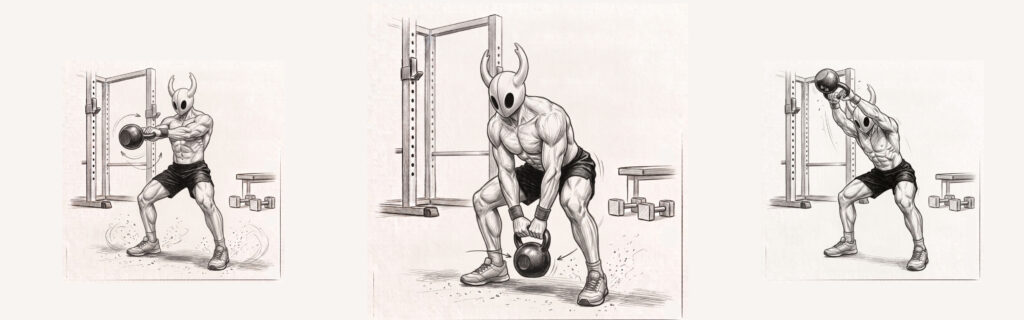
You’ve probably scrolled past a dozen ads for home gym setups — treadmills that fold up “for convenience,” multi-station machines that need a small crew to assemble, resistance band kits with seventeen attachments you’ll never use.
Here’s what none of them tell you: you only need one piece of equipment to train your entire body, fix your posture, and burn the belly fat that’s crept up from a decade of sitting.
A kettlebell.
That’s it. No cables, no motors, no manual thicker than your loan agreement. Just one solid piece of iron that does more for your body in 20 minutes than most gym machines do in an hour.
Why Kettlebells Beat Everything Else for a Home Setup
1. It Takes Up Almost No Space
One kettlebell sits in a corner of your bedroom, under your desk, next to your dog’s bed. No fold-out mechanism, no dedicated “gym room” you don’t have in a Bengaluru apartment.
2. Zero Assembly, Zero Guesswork
This is the part most home-gym buyers don’t think about until it’s too late — half of home equipment sits in a box for weeks because assembly needs two people and an Allen key you don’t own. A kettlebell arrives ready to use. Pick it up, start training.
3. It Trains Your Whole Body, Not Just One Muscle
Unlike a bench or a machine that isolates one movement, a kettlebell lets you train pulling, pressing, squatting, and core stability — all with one object. For someone getting 20-30 minutes a day, that efficiency matters more than any other factor.
4. It Directly Targets “Desk Body”
Tight shoulders. Lower back pain. A core that’s gone soft from 9 hours of sitting. Kettlebell training — specifically hinge and carry movements — is one of the most effective ways to reverse exactly this kind of damage, because it strengthens the posterior chain your chair has been quietly weakening for years.
5. It’s Honestly Hard to Get Bored Of
A single kettlebell supports dozens of different movements. You’re not stuck doing the same three exercises on a machine until you dread looking at it.
5 Kettlebell Moves That Cover Your Entire Body
- Kettlebell Swing — posterior chain, cardio, fat loss. The single best “no time” exercise that exists.
- Goblet Squat — legs, core, and mobility — undoes hours of hip stiffness from sitting.
- Kettlebell Deadlift — rebuilds the lower back strength that a desk job slowly erodes.
- Single-Arm Row — back thickness and posture correction, directly countering hunched shoulders.
- Farmer’s Carry — just walk while holding it. Core, grip, and full-body tension in under 5 minutes.
20 minutes, four times a week, one kettlebell. That’s a complete program — not a compromise.
“But How Do I Know Which One to Buy?”
Fair concern, especially when quality varies wildly between brands and most people can’t tell a good kettlebell from a bad one just by looking at a photo online. Here’s what actually matters:
- Single-cast iron construction — not two hollow shells welded together, which can crack under repeated use
- A wide, flat base — so it doesn’t wobble or tip when set down
- A smooth handle without seams — seams tear up your palms fast, especially during swings
- Clear weight marking and consistent sizing — no unlabeled or inconsistent-weight units
If you’re a first-time buyer, start with one moderate weight (most men start around 12-16kg) rather than buying a full rack. You’ll know within a month if you need to go heavier.
[Browse kettlebells vetted against this exact checklist — no assembly, no guesswork, delivered ready to lift.]
The Bottom Line
You don’t need a home gym that looks like a showroom. You need one honest piece of equipment that fits in a corner, needs no assembly, and works with the 20 minutes you actually have — not the 90 minutes you wish you had.
A kettlebell isn’t the easy way out. It’s the smart way in.