Written using coaching principles drawn from established strength training research and real feedback from home gym customers who have progressed using bodyweight and kettlebell training over the past year. Last updated July 2026.
Written by: Himanjyoti Sharma
You started strong. Push ups every night, maybe a kettlebell swing or two. Three weeks in, and it’s not as hard anymore. You’re not sore the next day. You’re not out of breath by round two.
This is usually the exact point where most people quit. Not from lack of motivation, but because they don’t know what comes next. No trainer standing there telling you to add weight or increase reps. No machine with a pin you move down a slot.
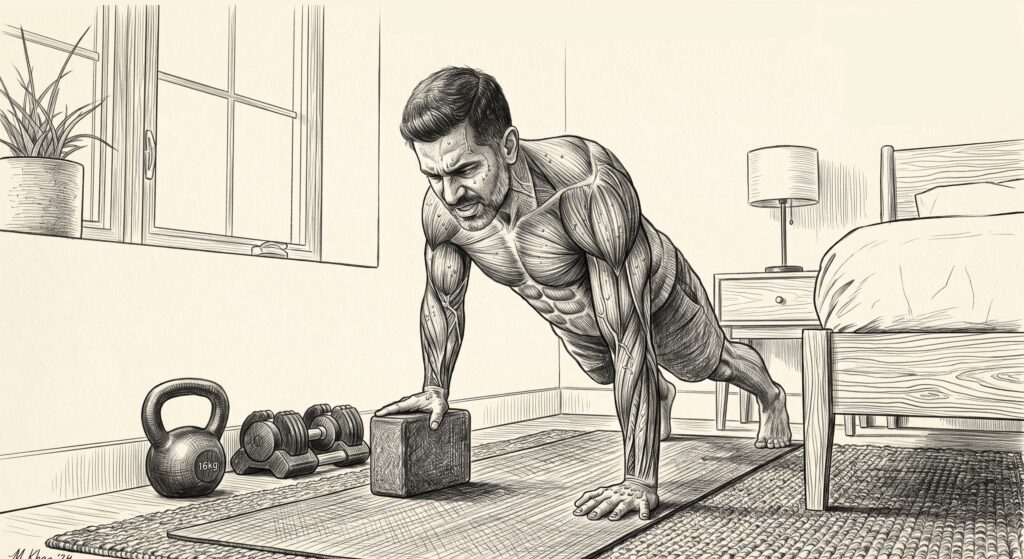
Progress at home isn’t complicated, but it does need a system. Here’s exactly how to keep moving forward, whether you have zero equipment or a single kettlebell in the corner of your room.
Why Most Home Workouts Stall After a Few Weeks
This is a well documented phenomenon in strength training research known as neuromuscular adaptation. The body adapts fast. Whatever made you sore in week one feels manageable by week four, because your muscles have already adjusted to that specific level of stress. If nothing changes in your routine, your results plateau even if you keep showing up.
This isn’t a motivation problem. It’s a programming problem, and it’s the same principle certified strength coaches apply when designing gym programs, just adapted here for a home setup with minimal equipment. The fix is simple once you know the four ways to progress.
The 4 Ways to Progress Without Buying New Equipment
1. Add Reps Before You Add Anything Else
If you were doing 3 sets of 10 push ups, move to 3 sets of 15. This is the simplest form of progress and it costs nothing. Most people quit adding reps too early and jump straight to thinking they need new equipment, when there is usually 20 to 30 percent more capacity left in a movement before it truly plateaus.
2. Slow Down the Movement
A push up done in 1 second and a push up done in 4 seconds are not the same exercise. Slowing the lowering phase (the eccentric) of any movement dramatically increases the difficulty without changing a single rep count. This works for squats, push ups, and kettlebell deadlifts alike.
3. Reduce Rest Time
If you’re resting 60 seconds between sets, drop to 40. Less recovery time between rounds forces your muscles and cardiovascular system to work harder with the exact same exercises you already know.
4. Change the Angle or Add Instability
A regular push up becomes harder as a decline push up. A two hand kettlebell swing becomes harder as a single arm swing. Small changes in angle or balance create a real jump in difficulty, often more than adding a few extra reps would.
When You Actually Need New Equipment
Bodyweight and a single kettlebell can take you further than most people expect, often 6 to 12 months if progressed correctly using the methods above. Equipment becomes genuinely necessary once:
- You can comfortably do 25 plus reps of a bodyweight movement with good form
- A single kettlebell no longer challenges you even in slower, single arm variations
- You’ve plateaued for 3 to 4 weeks despite changing tempo, rest, and angles
At that point, an adjustable dumbbell set or a second kettlebell of a heavier weight is a smarter next step than switching your entire routine.
A Simple 4 Week Progression Example
Week 1: Standard reps, standard rest, focus purely on clean form. Week 2: Same reps, reduce rest by 15 to 20 seconds. Week 3: Increase reps by 20 to 30 percent, keep the shorter rest. Week 4: Slow down the eccentric phase on every rep, same rep count as week 3.
Repeat this cycle with a new baseline every month. This alone keeps most people improving for far longer than they expect without ever needing a gym membership.
Related Questions
How do I know if I’m plateauing in my home workout?
The clearest sign is when a workout that used to leave you sore or breathless starts feeling routine, and your reps or sets haven’t changed in 3 to 4 weeks. If a movement no longer feels challenging by the last set, it’s time to apply one of the progression methods above.
Do I need heavier weights to keep progressing, or can bodyweight alone work long term?
Bodyweight alone can work for a surprisingly long time, especially with tempo changes and reduced rest. Most people can progress for 6 months or more before genuinely needing added external weight, particularly if they haven’t fully explored slower reps and shorter rest periods yet.
How often should I change my home workout routine?
You don’t need to change the exercises themselves often. What needs to change every 3 to 4 weeks is one variable, reps, rest time, tempo, or angle. Changing everything at once makes it hard to tell what’s actually driving your progress.
Is it normal to feel like home workouts get “too easy” over time?
Yes, and it’s actually a good sign your body has adapted. The mistake is stopping there instead of adjusting one variable to keep the challenge going. Feeling like a workout has become easy is the exact signal to progress, not a reason to quit.
Can I build real muscle at home without a full gym setup?
Yes, particularly in the first year of training. Most natural strength and muscle gains happen in this window regardless of whether you’re using a full gym or just bodyweight and a kettlebell, as long as the progression principles above are actually applied consistently.
A Note on This Guide
This article draws on standard strength and conditioning principles used in progressive overload programming, along with patterns we’ve observed from customers using our home gym equipment over the past year. If you have a pre existing injury, back condition, or joint issue, check with a doctor or physiotherapist before starting or progressing any new workout routine. This guide is meant as general fitness information, not personalized medical or training advice.
Have a question about progressing your specific routine? Drop it in the comments below and we will personally respond.
About the Author
Himanjyoti Sharma
Lost 12kg (70kg to 58kg) entirely through home workouts, without a gym membership. Writes from firsthand experience about what actually works for people trying to get in shape around a busy schedule, not textbook theory.