Written by: Himanjyoti Sharma, went from 70kg to 58kg through home workouts alone, writes for homegymlab
If you could only do one core exercise for the rest of your life, the plank would be a strong pick, and there’s real substance behind why, not just gym folklore. Here’s what actually makes it effective, and where it falls short on its own.
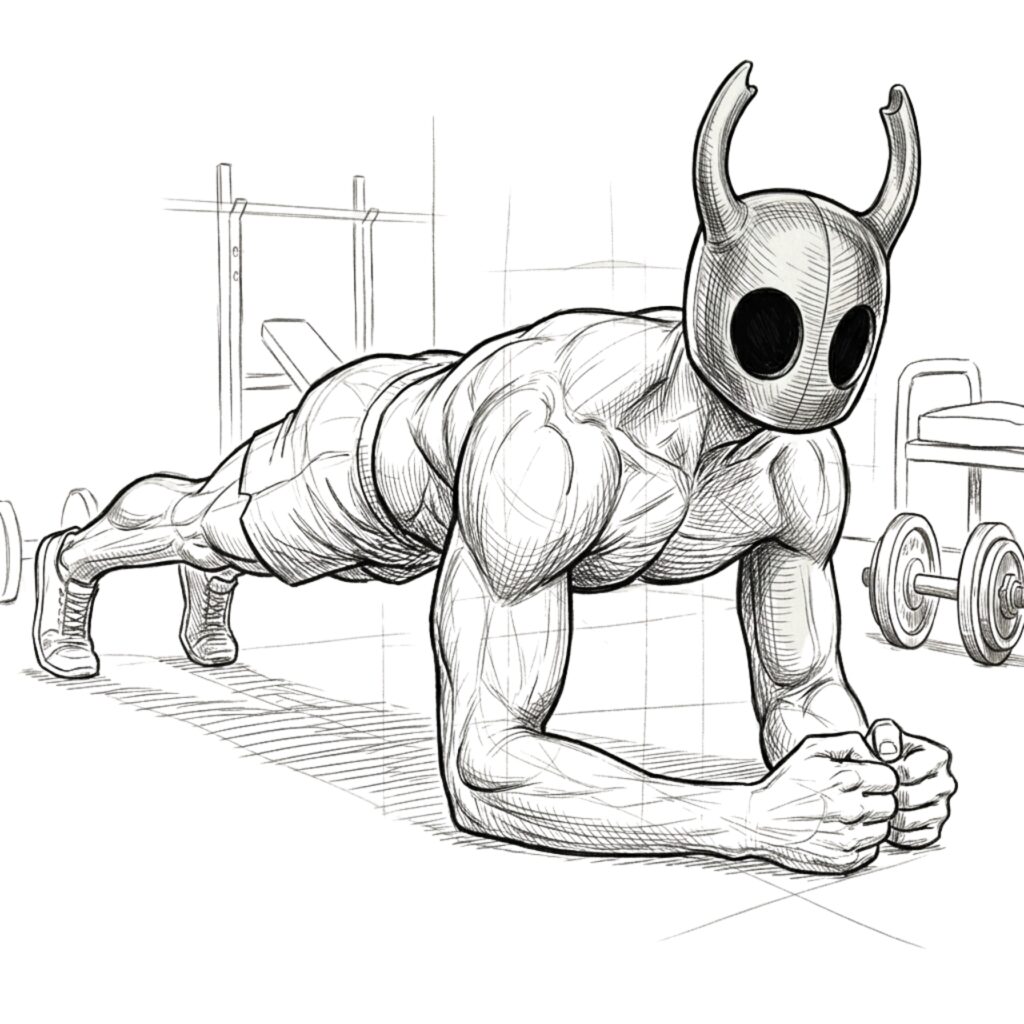
A plank doesn’t ask for your best minute. It asks you to hold steady when it’s not.
Why a Plank Trains Your Core Better Than a Crunch
A crunch isolates a small part of your abs through a limited range of motion. A plank does something different, it forces your entire core, front, sides, and lower back, to work together under constant tension.
This matters because that’s closer to how your core actually functions in real life. Whether you’re carrying groceries, doing a kettlebell swing, or just maintaining posture through a long workday, your core rarely works as one isolated muscle. It stabilizes as a connected system, and that’s exactly what a plank trains.
What a Plank Specifically Builds
Core endurance Not just brief strength, but the ability to hold tension over time, which matters more than raw strength for most everyday movement and posture.
Better posture Especially valuable if you sit at a desk most of the day, a stronger core directly counters the slouched, rounded posture that comes from hours in a chair.
Lower back support A stable core takes pressure off your spine, which is one reason planking is often recommended for people dealing with mild lower back tightness from sitting.
A foundation for everything else Once your core stability improves through planking, other exercises, from kettlebell swings to squats, tend to improve too, since a stable core supports almost every other movement pattern.
Where a Plank Falls Short on Its Own
Planking alone won’t build visible ab definition, since that depends primarily on overall body fat, not how much a muscle gets activated. It also doesn’t heavily challenge rotational strength, the kind of twisting motion your obliques handle, the way an exercise like a bicycle crunch does.
This is why a plank works best as a foundation exercise rather than the only exercise in a core routine. It builds the stability everything else depends on, but pairing it with one or two rotational or lower ab focused movements rounds out a routine more completely.
How to Actually Get the Most Out of It
Form matters far more than duration. A sloppy plank held for two minutes does less than a tight, controlled one held for 45 seconds.
Body position: forearms on the floor, elbows directly under your shoulders, body in a straight line from head to heels.
Core engagement: pull your belly button in slightly, squeeze your glutes, avoid letting your hips sag or rise.
Breathing: slow and steady throughout, don’t hold your breath.
If a full minute isn’t achievable yet, starting with 20 to 30 seconds and building up gradually is a better approach than forcing a longer hold with poor form.
Related Questions
Is a plank better than crunches for core strength?
For overall core stability, yes. A plank trains the entire core to work together under tension, while a crunch isolates a smaller portion of the abs through limited range of motion. Both have value, but a plank builds a more functional foundation.
How long should I hold a plank for it to be effective?
Even 30 to 45 seconds, held with good form, is effective, especially for beginners. Longer holds are less important than consistent daily practice with proper technique.
Can a plank alone give me visible abs?
No, visible abs depend primarily on overall body fat percentage, which is driven by diet and calorie balance. A plank builds the muscle and strength underneath, but won’t reveal it on its own without addressing body fat.
Does planking help with lower back pain from sitting?
Often, yes. A stronger, more stable core takes pressure off the lower back, which is one reason planking is commonly recommended for people dealing with mild back tightness related to prolonged sitting. Persistent or severe back pain should still be evaluated by a doctor.
What other exercises should I pair with planks for a complete core routine?
Side planks for oblique strength and hanging leg raises or bicycle crunches for lower ab and rotational work pair well with planks, rounding out the stability a plank builds with the areas it doesn’t directly target.
About the Author
Himanjyoti Sharma Lost 12kg (70kg to 58kg) entirely through home workouts, without a gym membership. Writes for homegymlab about what actually works for people trying to get in shape around a busy schedule, not textbook theory.
This article reflects general fitness training principles. If you have a pre existing back or core injury, check with a doctor before starting or changing any workout routine.